Can porcelain veneers straighten crooked teeth and brighten your smile in Narellan?
Case Note ID: Jan-2025-PV
Location: Toothsavers (serving the Narellan area)
Primary Treatments: Teeth Whitening, Porcelain Veneers
Supporting Technology: Digital Smile Design, Intraoral Scanning


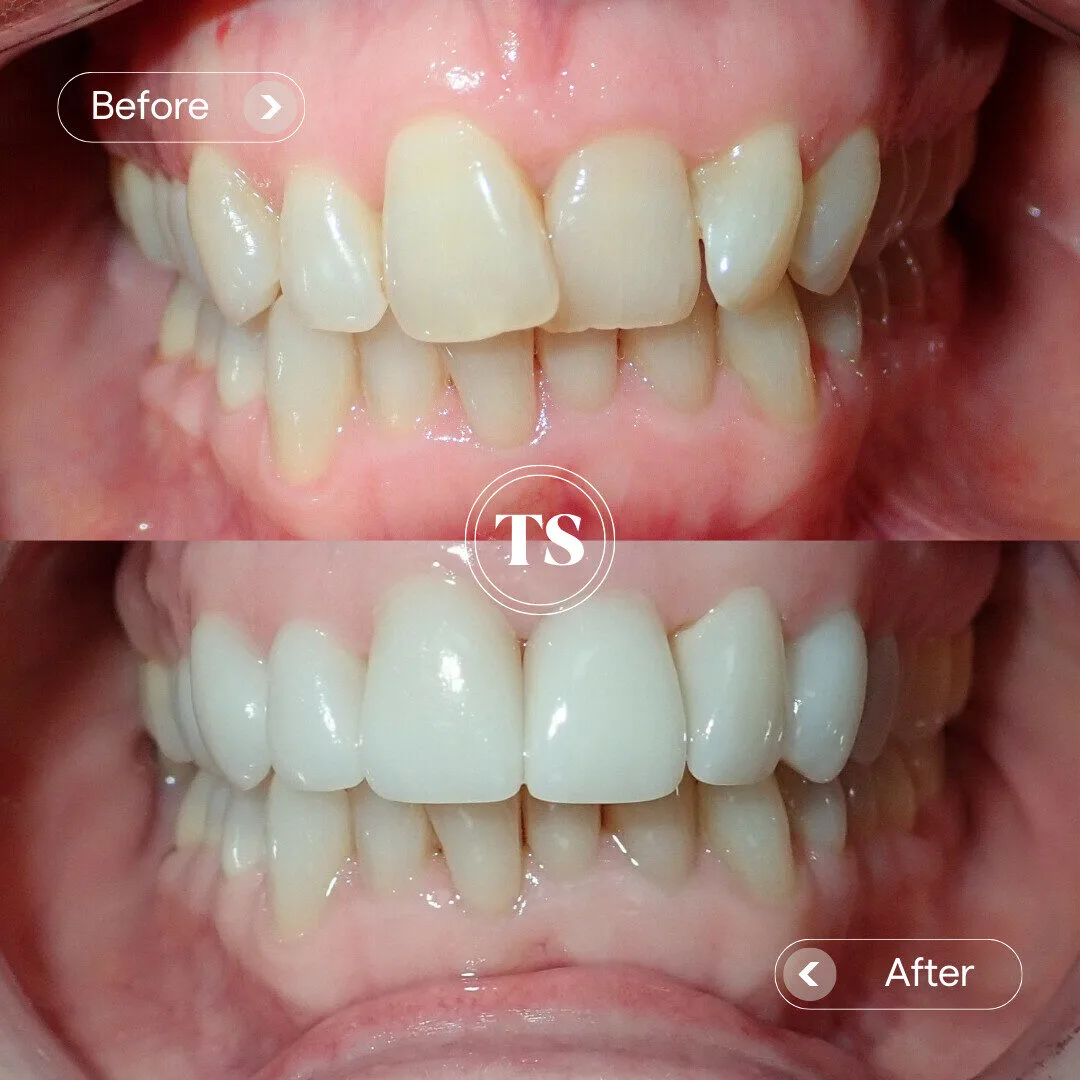
Presenting Clinical Problem
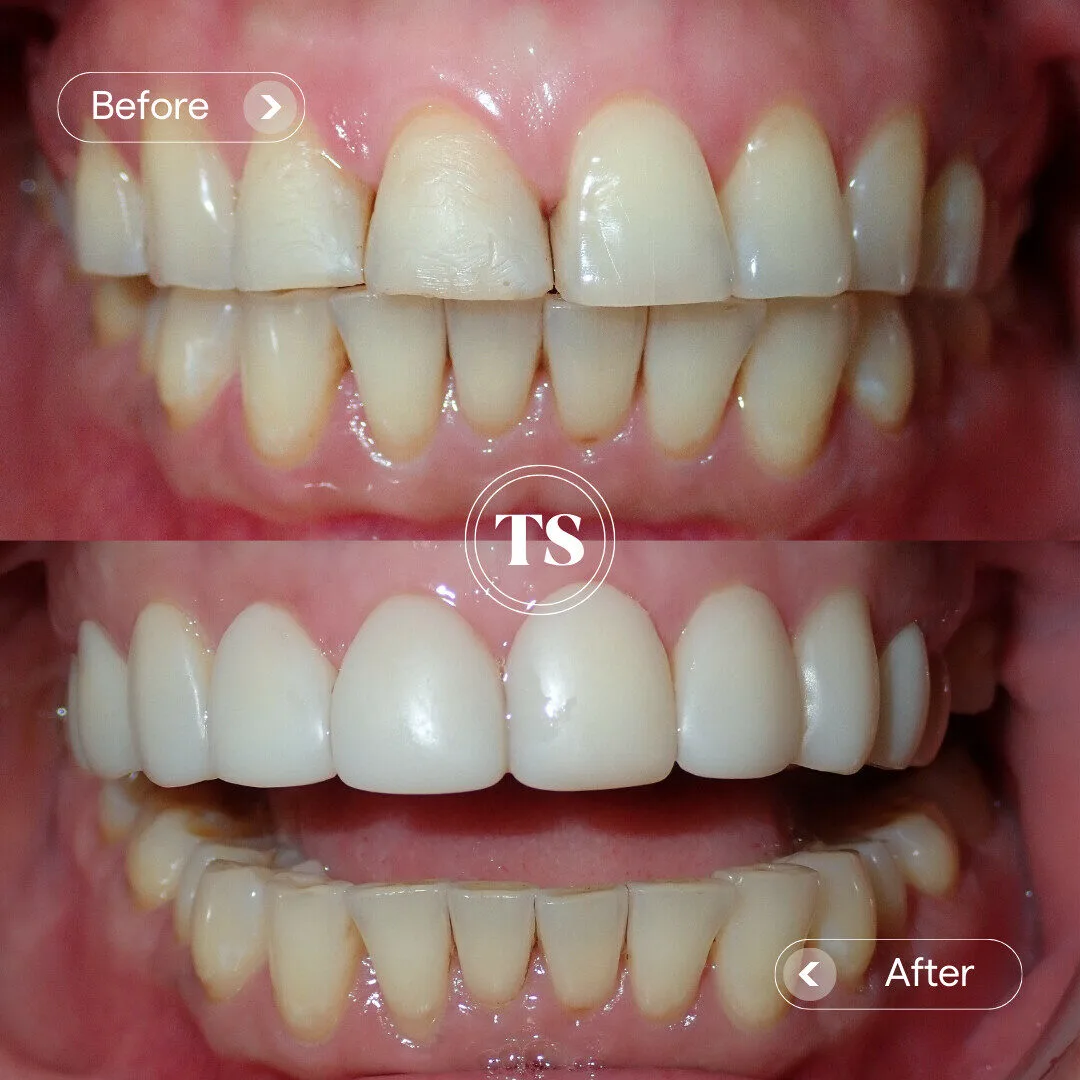
A patient presented with crooked, unevenly shaped teeth and general discolouration that conventional whitening alone could not address. The patient sought a solution that would provide both improved symmetry and a naturally brighter appearance.
- Crooked and Overlapping Teeth: Alignment irregularities were visible in the front teeth.
- Discolouration and Staining: Intrinsic and surface stains created uneven colour across the smile.
- Uneven Shape and Edges: Some teeth appeared worn or shorter than others.
- Aesthetic Goal: The patient wanted a balanced, natural look without excessive brightness or an artificial appearance.
The clinical objective was to enhance the smile’s harmony and colour through porcelain veneers, supported by professional whitening to create a uniform shade before veneer fabrication.
Treatment Plan & Clinical Process
A structured, digitally guided approach was used to achieve accurate planning and a natural aesthetic result.
Phase 1: Smile Assessment & Digital Design
Intra-oral scans and photographs were taken to design a digital preview using Digital Smile Design software. This allowed the patient to visualise potential improvements in alignment and proportion before treatment began.
Phase 2: Professional Whitening
A full-mouth professional whitening treatment was completed to lift the natural tooth shade, ensuring the veneers would blend seamlessly with the surrounding teeth.
Phase 3: Tooth Preparation & Shade Matching
Minimal enamel reduction was performed to prepare for the veneers. The final shade was carefully selected to achieve a bright yet realistic tone using digital shade-matching tools.
Phase 4: Veneer Fabrication & Placement
Custom porcelain veneers were crafted to refine alignment and shape. Each veneer was layered with lifelike translucency to mirror natural enamel before being bonded securely to the prepared teeth.
Frequently Asked Questions
How long do porcelain veneers last?
Porcelain veneers may remain serviceable for many years with appropriate care. Their longevity depends on oral hygiene, bite patterns, diet and lifestyle habits. With routine check-ups and maintenance, veneers often last over a decade, though replacement may eventually be needed.
To support durability, we recommend avoiding nail biting, chewing hard objects and teeth grinding. At ToothSavers™, we monitor veneers at reviews to ensure they function appropriately within your dental structure.
Can I get veneers on just one or two teeth?
Yes, veneers can be placed on individual teeth, though achieving natural-looking results can be more challenging when treating one or two teeth compared to multiple adjacent teeth. The main challenge is colour matching, as it’s difficult to perfectly match a single veneer to your natural teeth’s exact shade and characteristics, especially if adjacent teeth have natural variations or staining.
Texture and light reflection differences between veneers and natural teeth may be more noticeable with single-tooth treatment. Some people choose to whiten natural teeth before veneer placement to achieve better colour harmony. Success of single-tooth veneers depends on factors like adjacent teeth condition, colour, treatment reason, and your expectations. We’ll assess your specific situation and discuss realistic expectations.
Are there any risks or disadvantages to getting veneers?
Porcelain veneers involve permanent removal of tooth enamel, making the procedure irreversible and potentially requiring ongoing maintenance throughout your life. Possible complications include tooth sensitivity, veneer chipping or debonding, colour mismatch with adjacent teeth, and need for root canal treatment if excessive tooth structure is removed.
Some people experience increased sensitivity to hot and cold temperatures, which may be temporary or permanent. Gum irritation can occur if veneer margins aren’t properly fitted. Results may not meet expectations, as individual healing varies. Cost is significant, as veneers typically aren’t covered by health insurance and replacement costs can be substantial. Maintaining veneers requires ongoing dental care and eventual replacement, making them a long-term financial commitment.
Clinical Outcome
The combined whitening and veneer treatment successfully improved tooth alignment, shape, and brightness. The veneers complemented the patient’s facial features and created a natural, symmetrical appearance.
Ongoing care involves regular dental check-ups, excellent oral hygiene, and avoiding excessive biting forces or habits that may damage the veneers.

ServiceWe Mentioned
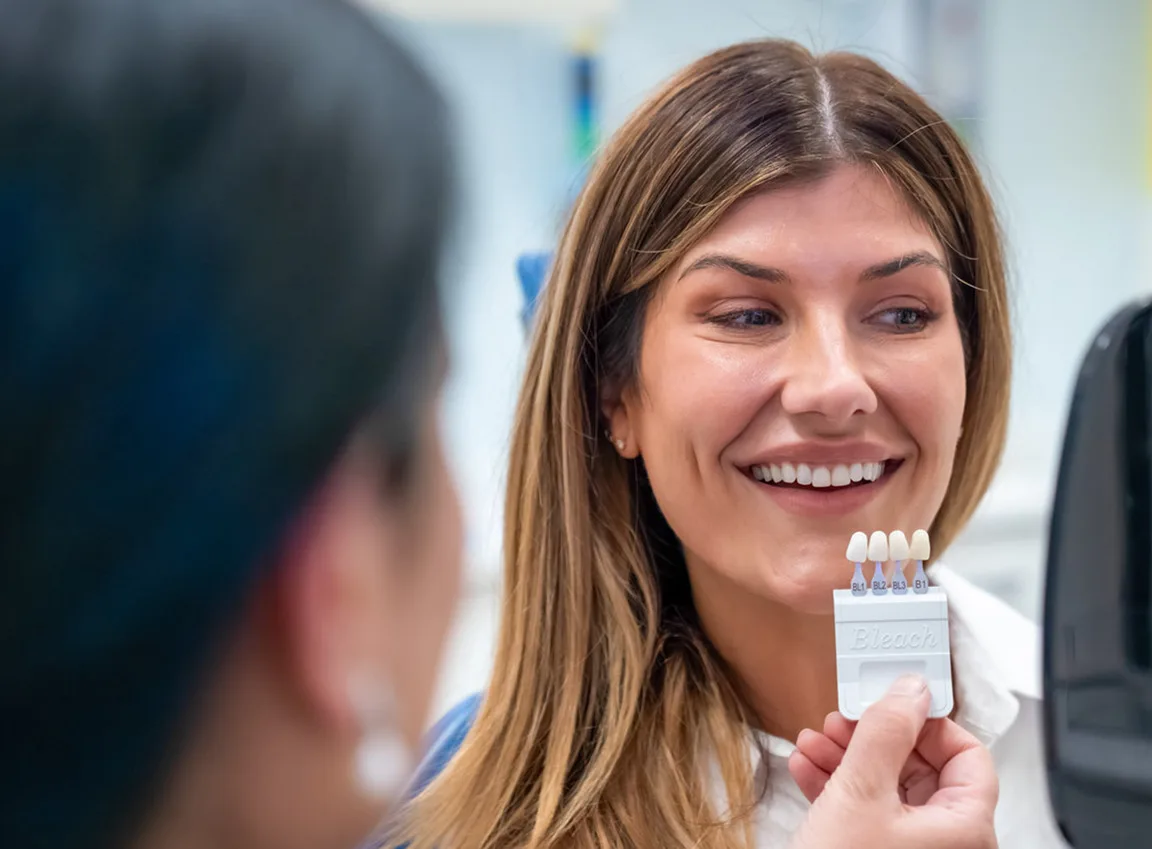
Custom-Made Porcelain Veneers
Disclaimer: Images are for illustrative purposes only. Individual results and patient outcomes may vary.
Related Articles
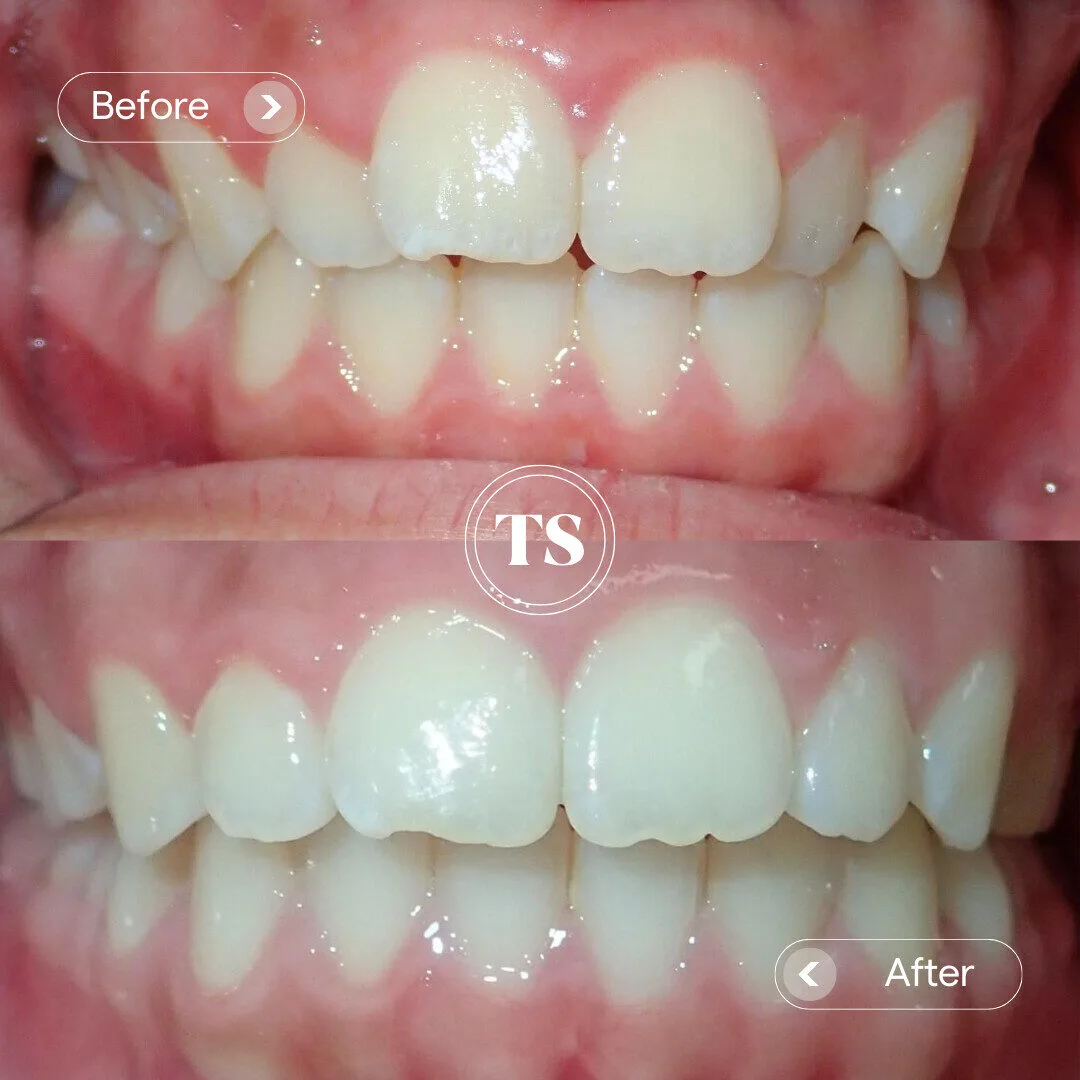
Can Invisalign and professional whitening create a straighter, brighter smile in Narellan Vale?
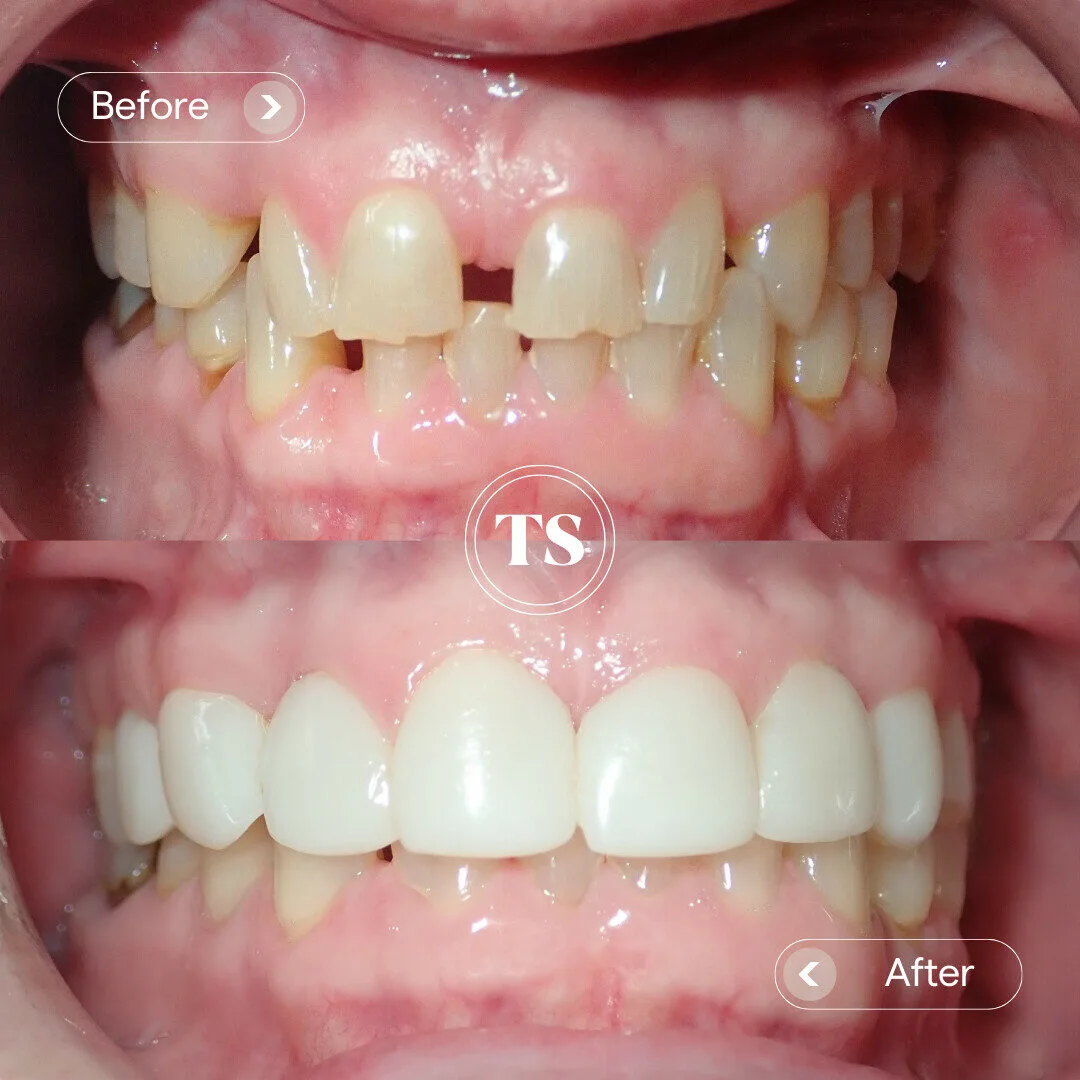
Can composite veneers close gaps and enhance small teeth in Narellan?
Can composite veneers create a natural-looking smile in Smeaton Grange?
Let's Get Your Smile Started.
Ready for a healthier, fresher smile? Fill out the form below to ask a question or book your visit. Our friendly team will be in touch shortly.